
플리머스 록

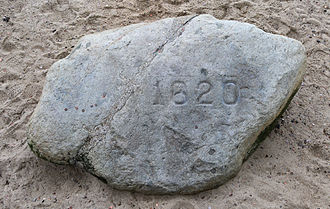


사진: Wikimedia Commons
플리머스 록은 1620년 메이플라워호를 타고 대서양을 건너온 청교도 순례자들(필그림)이 첫발을 디딘 곳으로 기념되는 매사추세츠 해안의 바위다. 영국 국교회의 압박을 피해 네덜란드 레이던을 거쳐 신앙의 자유를 찾아 나선 이들을 포함한 102명의 승객은 66일의 험한 항해 끝에 케이프코드에 닿았고, 상륙 전 배 위에서 메이플라워 서약을 맺어 하나님 앞에서 신앙과 자치에 기초한 공동체를 세울 것을 약속했다. 첫 겨울 혹독한 추위와 괴혈병으로 절반 가까이 목숨을 잃으면서도 정착을 이루어냈고, 이듬해 가을 원주민의 도움으로 거둔 첫 수확에 감사한 잔치는 추수감사절의 기원으로 전해진다. 바위 자체는 상륙 121년 뒤인 18세기에 마을 장로의 증언으로 지정된 상징물이지만, 신앙 때문에 고향을 떠난 이들의 결단은 아브라함처럼 '갈 바를 알지 못하고' 떠난 믿음의 순례를 보여준다. 미국 개신교와 시민 사회의 정신적 출발점으로 기억되는 곳으로, 1920년에는 바위 위에 고전 양식의 기념 포르티코가 세워졌다. 인근에는 메이플라워호 복원선과 필그림 기념관, 17세기 정착촌을 재현한 플리머스 박물관이 있다. 1620이 새겨진 바위를 본 뒤 메이플라워 2세호에 올라, 그 작은 배로 감행한 대서양 횡단의 실제 규모를 체감해 보자.
Plymouth Rock — Plymouth
Plymouth Rock marks the traditional landing place of the Pilgrims who crossed the Atlantic on the Mayflower in 1620 — 102 passengers, many of them Separatists seeking freedom to worship, who after a 66-day voyage bound themselves by the Mayflower Compact to a community of faith and self-government. Nearly half died of cold and disease in the first winter, yet the colony endured, and the harvest feast of 1621, shared with the Wampanoag who had helped them, is remembered as the first Thanksgiving. The rock itself was identified only in the eighteenth century and canopied with a classical portico in 1920, but the Pilgrims' Abraham-like departure into the unknown became a founding memory of American Protestantism. Board the reconstructed Mayflower II nearby to grasp how small the ship of that great crossing really was.